

Dining Room Essentials: Choosing Tables, Dinnerware, and Flatware That Work Together

Creating a practical and attractive dining space is easier than it may seem. With accurate measurements, carefully chosen materials, and a clear visual direction, you can bring your table, dinnerware, and flatware together without making everything look overly matched.
Here is what matters most:
Dining room essentials should support the way your household actually eats, gathers, and entertains. The right choices can improve seating comfort, simplify daily meals, reduce maintenance, and create a more cohesive dining area.
Learn how to choose pieces that suit your available space, household size, storage, design preferences, and budget. You will also find practical guidance for avoiding expensive mistakes and selecting items that remain useful as your needs change.
Let’s look at the dining essentials that can make your space more practical, comfortable, and cohesive.
Table of Contents
- Choosing the Right Dining Room Table
- Selecting Ceramic Dinnerware Sets
- Choosing Stainless Steel Flatware
- Making Tables, Dinnerware, and Flatware Work Together
- Creating a Practical Dining Setup for Daily Life
- Buying According to Budget and Long-Term Value
- Common Dining-Room Buying Mistakes
- A Simple Final Checklist
- Conclusion
What You Will Learn
- How to choose the correct dining table size, shape, and material
- What distinguishes earthenware, stoneware, porcelain, and bone china
- How stainless steel grades and finishes affect flatware
- Ways to coordinate tableware without matching every item
- Practical buying advice for different homes and budgets
- Common dining-room purchasing mistakes and how to avoid them
Introduction
A well-planned dining space begins with three essentials: a suitable table, practical dinnerware, and comfortable flatware. Each item has its own purpose, but they also need to work together. The table determines available space, while the size, shape, and style of the tableware influence how comfortable and cohesive each meal feels.
Good choices are based on room dimensions, household routines, storage, maintenance, and personal taste. Coordinating these elements carefully create a dining area that looks considered without feeling overly formal or perfectly matched.
1. Choosing the Right Dining Room Table
Overview
The dining room table is both the functional centre and visual foundation of the space. It influences where people sit, how easily they move, and how the room is used for everyday meals, entertaining, homework, or other activities.
A table can look ideal in a showroom yet feel awkward at home. Proportion and clearance matter as much as colour, shape, or material.
Why the Table Matters
An appropriately sized table allows diners to sit comfortably without blocking walkways or nearby furniture. One that is too large can make chairs difficult to move. A table that is too small may leave insufficient room for place settings and serving dishes.
The table also affects the room’s visual balance. In an open-plan layout, it helps define the dining zone. In a separate dining room, it often becomes the main focal point.
Key Factors to Consider
Measure the room before comparing designs. As a general planning principle, try to leave about 90 centimetres between the table edge and a wall or large piece of furniture. More space may be required along busy walkways or behind chairs that remain occupied while others pass.
Think about:
- The number of people eating at the table each day
- How often guests visit
- The space required for chairs and movement
- The size of plates and serving dishes
- Doors, radiators, cabinets, and walkways
- Fixed or extendable table designs
- Other activities that take place at the table
- Table dimensions and available floor space
Allow roughly 60 centimetres of table width per diner as a useful starting point. Actual comfort depends on chair width, table-leg position, and the amount of tableware used.
Comparing Dining Table Shapes
Rectangular tables
Rectangular tables suit long rooms, larger households, and formal dining spaces. They usually provide generous surface area and are widely available in extendable designs.
Their main limitation is circulation. A long table can dominate a small room, while sharp corners may restrict movement in narrow layouts.
Round tables
Round tables encourage conversation because everyone faces towards the centre. They also remove sharp corners, making movement easier in compact or square rooms.
Small round tables use space efficiently, but very large ones can be impractical. Diners may struggle to reach shared dishes placed in the centre.
Square tables
Square tables work best in square rooms and create an intimate arrangement for two to four people. Their balanced proportions can also help define a dining area within an open-plan space.
Larger square tables require considerable floor space. They may place diners too far apart and leave an awkward central area.
Oval tables
Oval tables offer much of the seating capacity of rectangular designs while providing softer edges and easier movement. They are particularly useful in rooms where corners make circulation feel restricted.
The curved ends may provide slightly less usable surface space, so check how chairs align with the table base.
Comparing Dining Table Materials
Solid wood offers warmth, durability, and the potential for refinishing. It can develop scratches and colour changes over time, but many marks can be repaired. Its weight and sensitivity to heat or moisture vary by timber and finish.
Veneer uses a thin layer of real wood over a stable core. It can provide a high-quality appearance at a lower price and weight than solid timber. Deep damage is harder to repair because the surface layer cannot withstand repeated sanding.
Glass helps a small dining room feel visually open and allows light to pass through. It is easy to wipe clean but shows fingerprints, dust, and water marks. Safety glass, edge construction, and manufacturer care instructions should be checked carefully, especially in homes with children.
Metal tables or metal-framed designs offer strength and a clean appearance. They may feel cold in some interiors and can show scratches or fingerprints depending on the finish. Check for stable joints and protective feet that will not damage flooring.
Stone and stone-effect surfaces create a substantial appearance. Natural stone can be heavy, porous, and sensitive to certain spills, while stone-effect materials may offer easier maintenance. Product specifications matter because sealing and cleaning requirements differ considerably.
Engineered materials, including laminates and composite surfaces, are often affordable and easy to maintain. Quality varies, particularly around edges, joins, and resistance to heat or moisture.
Best Choices for Different Homes
A round pedestal table can improve movement in a small room because it has no corner legs. Large families often benefit from a sturdy rectangular table with durable surfaces and enough width for shared dishes.
An extendable design offers flexibility for frequent entertainers without occupying unnecessary space every day. In an open-plan home, consider a table that relates to nearby kitchen finishes without copying them exactly. A formal dining room can support a larger solid-wood, stone, or carefully detailed table, provided it still suits regular household use.
2. Selecting Ceramic Dinnerware Sets
Overview
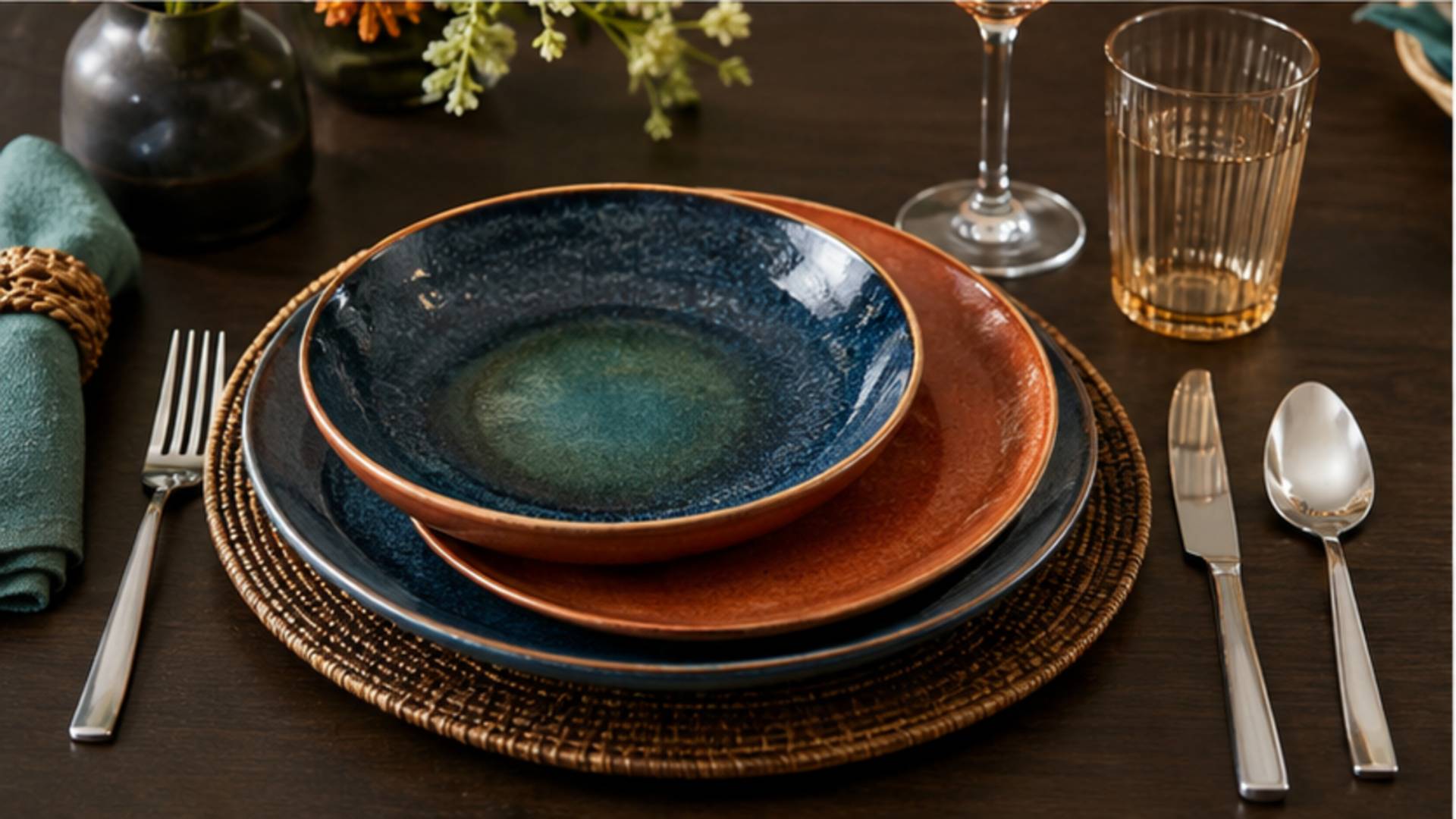
Ceramic dinnerware sets commonly contain dinner plates, side plates, bowls, and mugs or cups. Some collections also offer pasta bowls, serving platters, jugs, and matching dishes.
Dinnerware contributes colour, texture, and shape to the table. It must also fit comfortably in cabinets, dishwashers, and the usable surface area of the dining table.
Why Ceramic Dinnerware Remains Popular
Ceramic dinnerware is available in styles ranging from simple white porcelain to richly coloured stoneware. It generally retains heat well and can suit both everyday meals and formal occasions.
Durability depends on the ceramic body, glaze, firing process, thickness, and quality of manufacture. “Ceramic” is a broad category, so buyers should check product-specific instructions instead of assuming every set is dishwasher, oven, or microwave safe.
Types of Ceramic Dinnerware
Earthenware often has a warm, handmade appearance and may be thicker than porcelain. It is typically more porous before glazing and can be more vulnerable to chipping. Care requirements vary, especially for decorated or handmade pieces.
Stoneware is fired at a higher temperature than typical earthenware. It is usually dense, durable, and well suited to everyday dining. Reactive glazes and handmade finishes may create natural differences between pieces.
Porcelain is made from refined clay and fired at high temperatures. It can be thin, strong, smooth, and relatively lightweight. Plain porcelain adapts easily to casual and formal table settings.
Bone china traditionally includes bone ash in its composition. It is valued for its light weight, translucency, and strength, though composition and manufacturing standards vary. Buyers with ethical or dietary concerns may wish to verify the materials used.
What a Useful Dinnerware Set Should Include
Begin with the pieces your household uses regularly. A practical place setting normally includes a dinner plate, smaller plate, bowl, and mug or cup. Some people may prefer pasta bowls or low bowls instead of conventional deep bowls.
Purchase enough place settings for regular household members plus likely guests. Four settings may suit a couple with limited storage, while a family that entertains regularly may need eight or twelve.
Replacement availability is valuable. Open-stock collections allow individual pieces to be replaced without purchasing another complete set. They also make it easier to add serving pieces gradually.
Everyday Versus Special-Occasion Dinnerware
One versatile collection is often sufficient for homes with limited storage. Simple porcelain or durable stoneware can move from weekday meals to celebrations through linens, glassware, and serving accessories.
Separate sets may be worthwhile for households that host formal occasions frequently. Everyday pieces can then prioritise convenience, while special-occasion dinnerware can focus more heavily on fine proportions or decorative detail.
A formal set that rarely leaves the cupboard offers limited value. Consider how often it will genuinely be used before committing storage space and money.
Practical Buying Considerations
Confirm dishwasher and microwave suitability from the manufacturer. Metallic rims, hand-painted decorations, unusual glazes, and some specialist finishes may require extra care.
Check the diameter and height of every piece. Oversized plates may not fit shallow cabinets or standard dishwasher racks. Tall stacks of heavy stoneware can also be difficult to lift.
Rimmed plates help contain sauces and provide a defined border. Coupe plates have a smooth, rimless profile and offer more uninterrupted space for food, although their sloped edges can increase the overall diameter.
Hold individual pieces where possible. A plate should feel manageable when carrying several at once, while a mug handle should provide comfortable finger space. Think about resistance to chips, stackability, replacement cost, and long-term practicality rather than relying on appearance alone.
3. Choosing Stainless Steel Flatware
Overview
Stainless steel flatware is widely used because it is durable, practical, and compatible with many dining styles. Quality depends on more than the metal grade. Construction, thickness, finish, balance, and edge quality also affect performance.
Understanding Stainless Steel Grades
Markings such as 18/10, 18/8, and 18/0 refer to the approximate chromium and nickel content of the stainless steel.
The “18” represents chromium, which contributes to corrosion resistance. The second number indicates nickel content. Nickel can improve shine and resistance to staining, which is why 18/10 and 18/8 flatware often has a bright finish. An 18/0 composition contains little or no nickel and may suit buyers avoiding it.
These markings do not provide a complete measure of quality. Well-designed flatware sets made from 18/0 stainless steel may feel better and perform more comfortably than poorly constructed 18/10 alternatives.
What a Flatware Set Should Include
A standard five-piece place setting generally includes a dinner knife, dinner fork, smaller salad or dessert fork, tablespoon or soup spoon, and teaspoon. Set contents differ by market and manufacturer, so inspect the actual piece list.
Match the number of flatware settings to the dinnerware and expected guest count. Serving spoons, salad servers, cake servers, and other utensils can be added according to the meals you prepare.
Comfort and Usability
Comfort is easier to judge by holding the pieces. Look for balanced weight, smooth edges, secure handles, and proportions that suit your hands and plates.
Very lightweight flatware may feel insubstantial or bend under pressure. Extremely heavy pieces can become tiring or awkward for children and older users. Decorative handles should not create uncomfortable pressure points.
Check the fork tines, spoon bowls, and knife edges. They should feel smooth and functional rather than sharp in the wrong places.
Finish and Maintenance
Mirror-polished flatware has a bright, formal appearance but can show fingerprints, water spots, and fine scratches. Satin, brushed, and matte finishes are softer in appearance and may disguise everyday marks more effectively.
Decorative finishes, coatings, and contrasting details may require hand washing. For dishwasher-safe pieces, avoid overcrowding the basket and follow the manufacturer’s recommendations. Prompt drying can reduce water spots.
Store flatware in a divided organiser so pieces do not rub together unnecessarily. This also keeps frequently used utensils easy to reach.
Everyday Versus Formal Flatware
A simple, well-proportioned stainless steel set can work for almost every meal. Clean lines and a moderate shine adapt easily to different dinnerware, linens, and occasions.
A separate formal collection may suit frequent hosts who prefer finer shapes or decorative handles. For many households, however, investing in one comfortable and durable set is the more useful choice.
4. Making Tables, Dinnerware, and Flatware Work Together
Start With a Clear Visual Direction
Choose a broad mood that reflects your personal style before shopping. A warm traditional setting might combine timber, softly shaped porcelain, and classic flatware.
Other useful directions include rustic and relaxed, minimalist but welcoming, classic and formal, or eclectic and collected. These descriptions provide guidance without forcing every item into a rigid matching collection.
Coordinate Without Matching Everything
Cohesion comes from repetition. Repeat one or two elements such as colour, shape, finish, or material across the setting.
Good interior design creates connections between furniture, tableware, lighting, and decorative details without making every element identical.
For example, curved chair backs can relate to round plates, while black table legs can connect visually with a dark line in the dinnerware. Brushed flatware may echo the finish of nearby lighting or cabinet handles.
Perfect matching can make a dining space feel flat or staged. Controlled variation creates depth while maintaining visual order.
Balance Different Materials
Material contrast prevents the setting from feeling heavy. A warm wooden table works well with simple white ceramic dinnerware and polished stainless steel because the clean tableware balances the grain of the timber.
A glass table can be softened with textured stoneware and brushed flatware. Light dinnerware brings contrast to a dark table, while softly reflective cutlery keeps the arrangement from appearing severe.
Understated porcelain and classic flatware complement a traditional table without competing with carved details. On a modern table, organic-shaped ceramics and minimal cutlery can introduce gentle irregularity.
Consider Scale and Proportion
Dinnerware should fit the table rather than merely fitting inside the room. Large plates, wide flatware, water glasses, napkins, and serving bowls can quickly consume the available surface.
A narrow table may require smaller plates and a sideboard for serving dishes. Bulky chairs can also reduce the number of usable places even if the tabletop dimensions appear sufficient.
Arrange the largest meal you commonly serve before selecting accessories. This exposes space problems that an empty table will not reveal.
Use Colour Carefully
Neutral dinnerware provides a flexible foundation and allows food, linens, or seasonal accessories to supply colour. White, cream, grey, and muted natural shades tend to work with many table finishes.
Mixed dinnerware can look intentional if one feature remains consistent. Plates might share a colour family, glaze, or shape even when their patterns differ.
Limit the number of competing accents. A colourful ceramic collection may need simple napkins and flatware, while plain dinnerware can support a patterned runner or stronger centrepiece.
Test the Complete Place Setting
Arrange one complete table setting before purchasing full collections. Include the dinner plate, side plate, bowl, glass, napkin, and every piece of flatware normally used.
Check that the arrangement leaves elbow room and space for shared dishes. Examine the colour balance, scale, handling comfort, and distance between items. If possible, place the sample on the actual table under the room’s usual lighting.
5. Creating a Practical Dining Setup for Daily Life

A successful dining area should remain easy to use, clean, and reset. Small organisational choices often have a greater effect on daily comfort than decorative accessories.
Useful priorities include:
- Leave enough space between settings for comfortable arm movement.
- Keep frequently used plates and flatware within easy reach.
- Store heavy dishes on secure shelves at a manageable height.
- Use a divided tray to organise cutlery.
- Protect sensitive tables with mats, trivets, or a washable cloth.
- Choose easy-care runners, napkins, and seat covers.
- Reserve part of the table or a nearby surface for serving dishes.
Homes with children may benefit from durable everyday pieces and rounded table corners. Guest settings do not need to remain on the table permanently. Store spare pieces together so the table can be expanded quickly when required.
A formal dining room becomes more useful when it supports ordinary life. Comfortable chairs, accessible storage, and resilient finishes allow the room to accommodate weekday meals, work, reading, or family activities without losing its sense of occasion.
6. Buying According to Budget and Long-Term Value
Budget-Conscious Buyers
Prioritise the table because it has the greatest effect on layout and seating. Look for stable construction, an appropriate size, and a finish suited to daily use before paying for decorative detail.
Begin with essential place settings in a versatile design. Serving platters, speciality bowls, and extra flatware can be added gradually. Open-stock tableware may offer better long-term value than a large boxed set containing pieces you will not use.
Mid-Range Buyers
A mid-range budget can provide stronger table construction, more durable ceramic finishes, and better-balanced flatware. Replacement availability and manufacturer support may also improve.
Compare materials, joints, warranties, and care requirements rather than relying on branding. Coordinated collections can simplify buying, but each component should still earn its place through regular use.
Premium Buyers
Premium tables and tableware may offer skilled craftsmanship, solid materials, distinctive finishes, repairability, or heirloom potential. These qualities can justify a higher price when they suit the household’s habits.
Higher cost does not guarantee better function. Delicate finishes may be inappropriate for busy family meals, and very heavy designer pieces may be uncomfortable.
Spend more on structural quality, comfort, and items used every day. Save on easily changed accessories such as napkins, runners, and seasonal decorations.
7. Common Dining-Room Buying Mistakes
Use this table to identify common purchasing problems, understand their consequences, and avoid them before investing in dining-room essentials.
| Common Buying Mistake | Possible Consequence | How to Avoid It |
|---|---|---|
| Buying a table that is too large | The room may feel crowded and difficult to move around. | Measure the room and mark the table dimensions on the floor before purchasing. |
| Ignoring chair clearance | Pulled-out chairs may block walkways or hit nearby furniture. | Allow around 90 centimetres of clearance where possible. |
| Choosing appearance over comfort | Stylish chairs or tableware may feel uncomfortable during regular use. | Test chairs and check the weight and balance of tableware before buying. |
| Purchasing too few place settings | You may lack enough pieces for guests or replacements. | Include settings for regular guests and a few spare pieces. |
| Selecting oversized dinnerware | Plates may not fit cabinets, dishwashers, or smaller tables. | Check product dimensions against your storage and table space. |
| Buying delicate pieces for daily use | Regular handling may cause chips, scratches, or breakage. | Choose durable items for daily use and save delicate pieces for occasions. |
| Following short-lived trends | Expensive furniture and tableware may quickly feel dated or unsuitable. | Choose versatile essentials and introduce fashionable colours through affordable accessories. |
| Forgetting space for serving dishes | The table may feel cramped once food and drinks are added. | Test a full place setting and leave sufficient central serving space. |
| Failing to check care instructions | Incorrect cleaning may damage finishes or cause staining and fading. | Review dishwasher, microwave, and cleaning guidance before buying. |
8. A Simple Final Checklist
Before completing your dining-room purchases:
- Measure the room, table area, cabinets, and shelves.
- Confirm everyday and occasional seating requirements.
- Allow sufficient clearance around the table.
- Consider household routines and entertaining habits.
- Compare durability, weight, and maintenance needs.
- Check dinnerware dimensions and appliance compatibility.
- Hold and test flatware where possible.
- Arrange one complete sample place setting.
- Confirm the availability of individual replacement pieces.
- Coordinate items without making everything match.
- Prioritise long-term usefulness over temporary trends.
Build a Dining Space That Works for Real Life
The most effective dining spaces balance proportion, comfort, durability, and personal style. A suitably sized table creates the foundation, practical ceramic dinnerware supports everyday meals, and well-balanced stainless steel flatware completes each setting.
Measure carefully and consider how your household genuinely uses the room. Pieces that coordinate without matching perfectly will feel more natural and remain easier to adapt as routines and tastes change.