
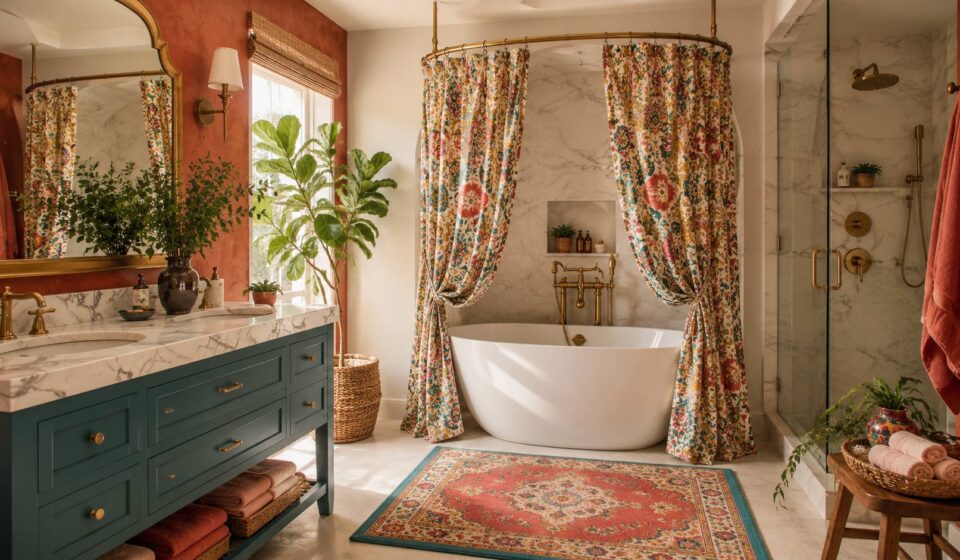
Simple Bathroom Upgrades: Shower Curtains and Bath Mats That Combine Style with Function

Shower curtains and bath mats may seem like minor bathroom details, but unsuitable choices create surprisingly persistent problems. A curtain that is too short can leave the floor wet, while a thick mat that dries slowly may develop odours and remain uncomfortable between uses.
Replacing these two essentials offers an affordable bathroom makeover without changing the tiles, flooring, sanitaryware or plumbing.
Good results begin with practical decisions. Accurate measurements, suitable materials, manageable cleaning requirements and thoughtful colour coordination matter far more than choosing a fashionable pattern alone.
Key Takeaways
- Measure the shower area and floor space before comparing products.
- Choose curtain materials according to water resistance, drying and care.
- Use a separate liner if the decorative curtain cannot control water alone.
- Balance bath-mat absorbency with its ability to dry between uses.
- Check that the mat backing is compatible with the bathroom flooring.
- Coordinate colours and textures without making every accessory identical.
1. Why These Small Bathroom Upgrades Make a Difference
As practical home essentials, shower curtains and bath mats contribute to more than bathroom decoration. The curtain helps contain water within the bath or shower area, while the mat provides a comfortable place to step and absorbs moisture from wet feet.
Together, they also influence how clean and organised the room feels. A properly positioned curtain protects nearby flooring and furniture from repeated splashes. A bath mat that dries efficiently can prevent the floor from remaining damp after every shower.
Appearance still matters, but it should not lead the buying decision. A beautiful cotton curtain may require a liner, and a luxurious deep-pile mat may be difficult to dry in a bathroom with poor ventilation. Products need to suit the actual conditions in the room.
These simple bathroom upgrades are particularly useful for renters. Curtains and mats can introduce colour, pattern and texture without changing permanent features. Homeowners can use the same approach to refresh a guest bathroom or improve a functional but dated space on a limited budget.
2. How to Choose the Right Shower Curtain
Measure Before Comparing Designs
Measure the complete width of the shower or bathtub, not just the open section. A curtain needs enough width to hang with gentle folds when closed. One pulled completely flat may leave gaps at the sides and struggle to contain splashes.
Measure vertically from the curtain rod or ring position to the intended lower edge. The curtain should sit inside the bath or shower tray during use without gathering heavily at the bottom. Fabric that drags on the floor or lies in standing water collects dirt and dries slowly.
Check the spacing of hook openings and include the drop created by the curtain rings. If you use a tension rod, confirm that it fits securely within the available width. Product descriptions using terms such as “standard” or “extra-long” should never replace checking the actual dimensions.
Compare Shower-Curtain Materials
| Material | Main Advantages | Possible Limitations | Best Suited To |
| Polyester | Water-resistant, lightweight and easy to clean | Quality and drape vary | Busy everyday bathrooms |
| Cotton | Soft appearance and good pattern selection | Usually needs a liner and may dry slowly | Decorative bathrooms |
| Linen blend | Textured, relaxed and visually refined | May crease and need careful washing | Well-ventilated bathrooms |
| Vinyl | Strong water control and easy wiping | Can feel less textile-like | High-use showers |
| PEVA | Lightweight and water-resistant | May crease or wear around hook holes | Practical liners |
| EVA | Flexible and easy to maintain | Thickness and durability vary | Everyday water protection |
| Coated fabric | Combines a fabric look with water resistance | Coating may require specific care | Single-curtain setups |
No material is ideal for every household. Polyester often offers a useful balance of appearance, water resistance and easy maintenance. Cotton and linen blends provide a softer decorative finish but normally require more drying time and may need a separate liner.
Vinyl, PEVA and EVA are commonly used for water-resistant curtains or liners. Their flexibility, weight and durability vary between products, so material names alone do not indicate overall quality.
Check the care label before buying. Confirm whether the curtain can be machine washed, wiped clean or tumble dried. Decorative treatments, coatings and printed finishes may have special cleaning requirements.
Decide Whether You Need a Liner
A decorative shower curtain gives the bathroom colour and texture. A liner forms the inner barrier that stays inside the bath or shower tray and helps prevent water from escaping.
Cotton, linen and other absorbent fabrics generally benefit from a separate liner. Some water-resistant polyester curtains can work independently, although this depends on their construction and the amount of direct spray they receive.
Weighted or magnetic hems can help keep a liner correctly positioned. Magnets only work with compatible metal surfaces, so they may not suit every bath. A weighted lower edge can still reduce movement caused by airflow or water pressure.
Replaceable liners allow the decorative curtain to remain in place longer. Hookless designs can simplify removal for cleaning, while curtains with removable liners offer a balance between convenience and appearance.
Choose Suitable Hooks and Rods
Standard hooks are affordable and widely available, but they can catch or detach if poorly shaped. Roller-ball rings move more smoothly along the rod and may make a heavy curtain easier to open.
Hookless curtains have built-in openings that fit around the rod. They are convenient to remove, although replacement choices may be more limited.
Fixed rods generally provide dependable support when installed correctly. Tension rods avoid drilling and are useful in rental bathrooms, but they must be positioned securely and used within their specified weight limit.
A curved rod creates more shoulder space inside a bath. It also projects further into the room, which may be inconvenient in a compact layout. Always follow the manufacturer’s measuring and installation instructions.
3. Finding a Bath Mat That Works Between Washes
Balance Absorbency and Drying Speed
An absorbent bath mat catches water quickly, but absorbency is only half of the requirement. The mat must also release that moisture and dry before it is needed again.
A thick mat may feel comfortable yet remain damp in a busy family bathroom. A thinner quick-drying bath mat may offer better daily performance where several people shower within a short period.
Consider ventilation, climate and available drying space. A bathroom with an effective extractor fan and good airflow A windowless room may need a lighter mat that can be hung easily after use.
Compare Common Bath-Mat Materials
Cotton feels soft, absorbs water well and is often machine washable. Thick cotton mats can become heavy when wet and may need more time to dry.
Microfibre dries relatively quickly and can hold considerable moisture for its weight. Its texture varies, and some products may flatten after repeated washing.
Chenille mats have raised fibres that create a soft surface and collect water from wet feet. Deep chenille can trap lint or take longer to clean thoroughly, depending on its density.
Memory-foam mats provide cushioning and warmth. They usually contain several material layers, so washing and drying instructions must be followed carefully. Folding or overheating the foam may cause damage.
Bamboo mats create a firm, slatted surface rather than absorbing water like fabric. They can dry quickly when air circulates around them, but water may pass through to the floor beneath.
Diatomaceous earth and other stone-style mats absorb surface moisture and often dry rapidly. They feel hard underfoot and may crack if dropped or placed on an uneven surface. Cleaning and maintenance requirements vary.
Synthetic blends can combine durability, softness and faster drying. The balance depends on fibre composition, pile depth and construction rather than the word “synthetic” alone.
Check Backing and Floor Compatibility
Rubber, latex and thermoplastic backing can help a mat remain stable, but no backing guarantees slip prevention. Water, soap residue, dust and damaged backing can all reduce grip.
Lift the mat regularly and clean the floor beneath it. Leaving a backed mat on damp flooring for long periods can trap moisture and may affect some floor finishes.
Check compatibility if the bathroom has natural stone, luxury vinyl, treated timber or underfloor heating. Certain backing materials may discolour or react with sensitive finishes. Follow both the flooring and mat manufacturers’ guidance.
Replace a mat if its backing begins to crack, peel or leave residue. A mat that slides, curls at the edges or no longer lies flat should not be treated as dependable.
Select the Correct Size and Shape
A compact rectangular mat is often enough for a small shower enclosure. Longer runners can serve a double vanity or provide coverage beside a wide bath.
Round mats soften bathrooms dominated by straight lines, while contoured designs fit around sanitaryware. Contoured mats require careful sizing because a poor fit can look awkward or interfere with movement.
Open the bathroom door and nearby cabinets before measuring. The mat should not bunch under a door, cover a floor vent or narrow an important walking route. There should also be somewhere suitable to hang or store it while it dries.
4. How to Coordinate Colour, Pattern and Texture
Begin With Permanent Bathroom Features
Start with the elements that are difficult or expensive to change. Tiles, flooring, wall colour, vanity units and metal fixtures establish the visual foundation.
Look at the undertones in these surfaces. Warm cream tiles may work naturally with terracotta, olive or beige. Cool grey stone may suit blue, charcoal, white or muted green.
Consider the room’s lighting as well. A colour that looks fresh online may appear dull under weak artificial lighting. Compare samples in the bathroom during the day and evening where possible.
Coordinate Without Creating a Matching Set
The shower curtain and bath mat should relate to each other, but they do not need to be identical. Repeating one colour or texture is often enough to create a cohesive result.
For example, a botanical curtain containing muted green can work with a plain sage bath mat. A white textured curtain may suit a charcoal mat that echoes dark taps or cabinet handles.
Perfectly matching sets can make a bathroom feel flat. Slight variation creates depth and makes it easier to replace one item without redesigning the entire scheme.
Use a Simple Colour Formula
A practical colour scheme contains one main colour, one supporting neutral and one restrained accent. The permanent surfaces often provide the neutral, leaving the curtain and smaller accessories to introduce personality.
White and pale neutral bathrooms can support stronger colours without appearing crowded. Navy, forest green, rust or mustard can add contrast, while towels or small accessories can repeat the accent.
In a dark bathroom, a lighter curtain can prevent the shower area from feeling enclosed. Small rooms often benefit from softer backgrounds and controlled pattern, although a single bold curtain can create an effective focal point.
Bathrooms with colourful tiles require more restraint. Select one colour already present in the tilework and repeat it subtly rather than adding several unrelated shades.
Balance Pattern With Texture
Pair a patterned shower curtain with a plain or lightly textured mat. This allows the curtain to remain the main visual feature.
A simple curtain can support a deeper chenille mat or woven texture. Botanical patterns work well with natural timber, bamboo and leafy greens, while geometric designs suit streamlined fittings and minimal accessories.
Dark curtains can be balanced with pale towels and flooring. Neutral curtains can support a coloured mat, but avoid introducing several strong patterns within a compact room unless they share a clear palette.
5. Quick Recommendations for Different Bathrooms
| Bathroom Type | Shower-Curtain Priority | Bath-Mat Priority | Styling Approach |
| Small bathroom | Correct length and light visual weight | Compact size and fast drying | Pale base with one accent |
| Family bathroom | Easy cleaning and reliable water control | Durable, washable and quick drying | Practical colours and simple pattern |
| Rental bathroom | Secure tension-rod compatibility | Floor-safe backing | Reversible, removable updates |
| Guest bathroom | Attractive drape and simple care | Comfortable texture | Coordinated neutral palette |
| Poorly ventilated bathroom | Moisture-resistant, fast-drying material | Lightweight construction | Minimal layers and clutter |
| Spa-inspired bathroom | Soft texture and controlled colour | Comfortable natural-looking finish | Warm neutrals and subtle texture |
These recommendations are starting points rather than fixed rules. Household routines and room conditions should always influence the final decision.
6. Making the Setup Work in Daily Life
Correct use can extend the life of both products and keep the bathroom more comfortable.
- Position the curtain or liner inside the bath during use.
- Spread the curtain open afterwards so folds can dry.
- Hang a wet bath mat where air can reach both sides.
- Keep a spare mat available for busy periods.
- Remove standing water from the floor promptly.
- Check the curtain, rod and backing regularly for damage.
Choose products that are easy to remove. Complicated hooks, heavy materials and delicate finishes may discourage regular cleaning.
Families with children may prefer durable, machine-washable products that tolerate frequent use. Older adults and guests benefit from clear floor space, stable placement and mats that do not curl at the edges.
Pets can introduce extra hair, dirt and moisture, making washable low-pile mats more practical. Whatever the household, avoid leaving a wet mat permanently on the floor.
Accessories cannot correct a leaking shower, blocked drain or persistent bathroom ventilation. If moisture continues to collect despite correct curtain placement and drying, identify and address the underlying cause.
7. Cleaning, Drying and Knowing When to Replace
Caring for Shower Curtains and Liners
Read the care label before cleaning. Some fabric curtains can be machine washed on a gentle programme, while coated materials may require wiping or hand washing.
Remove rings where instructed and clean them separately. Soap residue can collect around curtain hems, hook openings and folds, so inspect these areas regularly.
Allow the curtain to dry fully before folding or storing it. Keeping it spread across the rod after showering improves airflow and reduces damp creases.
Never mix cleaning chemicals. Use only products and methods that are appropriate for the curtain material and bathroom surfaces.
Caring for Bath Mats
Shake out loose fibres and debris before washing. Follow instructions for water temperature, detergent quantity and drying.
Rubber-backed mats may be unsuitable for high heat because it can damage the backing. Memory foam may also require gentle washing and air drying. Heavy cotton mats need enough room in the washing machine to move and rinse properly.
Stone-style mats normally require a different process from fabric mats. Follow the product instructions for cleaning, drying and restoring absorbency.
Signs That Replacement Is Sensible
Cleaning cannot correct every problem. Replacement may be appropriate when a curtain or mat develops:
- Persistent odours or permanent stains
- Cracked, peeling or sticky backing
- Reduced absorbency
- Damaged hems or hook openings
- Poor water control
- Curled edges or an uneven surface
- Visible deterioration that affects use
There is no universal replacement schedule. Product quality, frequency of use, ventilation and care all influence how long an item remains practical.
8. Buying for Your Budget and Long-Term Value
Budget-Conscious Approach
To achieve better long-term value, prioritise measurements, maintenance and drying performance before decorative detail. An affordable polyester curtain and washable cotton or microfibre mat can provide dependable everyday function.
Use colour and pattern to refresh the room without changing permanent features. Simple designs are easier to coordinate when towels or accessories are replaced later.
Mid-Range Approach
A mid-range budget may provide stronger hems, better stitching, smoother curtain hardware and more durable mat backing. Replacement liners and coordinated collections can also simplify future updates.
Examine construction rather than relying only on branding. A carefully finished product that suits the room is more valuable than an expensive design with inconvenient care requirements.
Premium Approach
Premium products may offer specialist textiles, tailored sizing, distinctive patterns and carefully finished hardware. These features can be worthwhile in a bathroom where appearance and long-term construction quality matter.
Higher prices do not guarantee faster drying, easier cleaning or better floor compatibility. Suitability remains more important than prestige.
Where to Spend and Save
Consider spending more on accurate sizing, durable hardware, washable materials and products designed for frequent use. A dependable rod and smoothly moving rings can improve the performance of every replacement curtain.
Save on seasonal colours and decorative accessories. These elements are inexpensive to change and do not need to carry the practical demands placed on the curtain, liner or mat.
9. Common Buying Mistakes and Better Choices
| Buying Mistake | Possible Result | Better Choice |
| Buying without measuring | Poor fit and water escape | Measure the complete area first |
| Choosing a short curtain | Wet floors | Check the full hanging length |
| Letting fabric drag | Dirt and slow drying | Leave suitable floor clearance |
| Assuming every material is waterproof | Water passes through | Check resistance and liner needs |
| Forgetting a necessary liner | Damp decorative fabric | Add a compatible liner |
| Choosing appearance over care | Difficult maintenance | Review the care label first |
| Buying a slow-drying mat | Persistent dampness | Balance absorbency and drying |
| Ignoring floor compatibility | Marks or weak grip | Check both product instructions |
| Blocking a door | Restricted movement | Measure with the door open |
| Matching everything exactly | Flat, dated appearance | Coordinate selected details |
| Mixing several patterns | Visual clutter | Use one dominant pattern |
| Ignoring damage | Reduced performance | Inspect and replace when necessary |
Material, moisture resistance and visual compatibility should all be considered when selecting bathroom flooring, particularly when mats and other moisture-retaining accessories will be placed over it.
10. Final Buying Checklist
Before purchasing shower curtains and bath mats:
- Measure the shower or bathtub area.
- Confirm the required curtain width and length.
- Decide whether a separate liner is needed.
- Compare water resistance and drying time.
- Check hooks, rings and rod compatibility.
- Measure the available bathroom floor area.
- Balance mat absorbency with drying speed.
- Verify backing and flooring compatibility.
- Review washing and drying instructions.
- Consider ventilation and household usage.
- Coordinate colours without matching everything.
- Check that doors and cabinets move freely.
- Prioritise long-term daily usefulness.
A Small Change That Improves the Whole Bathroom
A correctly sized shower curtain and a practical bath mat can make a bathroom cleaner, safer to use, more comfortable and visually complete. These affordable additions provide a meaningful refresh without the expense or disruption of renovation work.
Measure carefully, compare materials and consider how quickly each item will dry in the room. Products that are easy to clean, properly positioned and coordinated with the existing bathroom will remain useful long after temporary trends have passed.