

Quick Answer
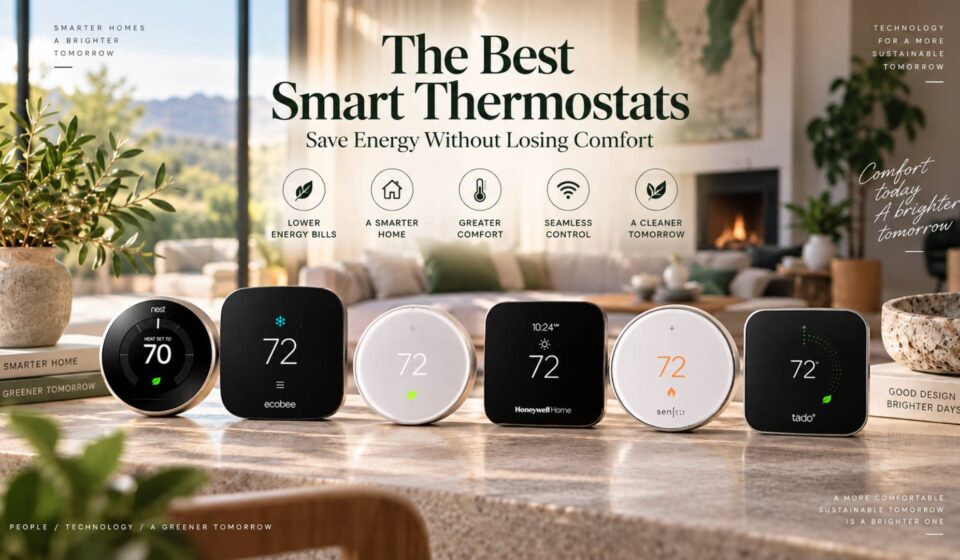
The best smart thermostat depends more on your heating or HVAC system than on any single headline feature. Google Nest Learning Thermostat (4th gen) stands out for learning features and Google Home users, while ecobee Smart Thermostat Premium offers strong room-sensor and advanced HVAC support. tado° Smart Thermostat X (2nd gen) is particularly relevant to European boiler and hydronic-heating homes, while Honeywell Home X2S offers simple Matter-based smart-home integration. Amazon Smart Thermostat suits Alexa-focused buyers seeking a lower-cost option, and Mysa for Baseboards V2 targets high-voltage electric heating. Always check wiring and system compatibility first.
Smart thermostats can make heating and cooling easier to schedule, automate and monitor, but there is no model that works equally well in every property. Central North American HVAC systems, European boilers, heat pumps and line-voltage electric heaters can require very different controls.
For this guide, we reviewed current manufacturer specifications, compatibility documentation, installation requirements, smart-home integrations, sensor support, energy-management features and regional availability. The shortlist is based on editorial research rather than long-term hands-on testing. Compatibility should always be confirmed for the exact heating or cooling equipment before purchase.
6 Best Smart Thermostats of 2026 at a Glance
| Smart Thermostat | Best For | Standout Feature | Smart-Home Support | Important Consideration |
|---|---|---|---|---|
| Google Nest Learning Thermostat (4th gen) | Google Home and learning automation | Learning schedule + included room sensor | Google Home, Matter | Available officially in the US and Canada |
| ecobee Smart Thermostat Premium | Room sensing and advanced HVAC | Included SmartSensor + air-quality monitoring | Alexa, Google Assistant, Apple Home, SmartThings | Designed mainly for 24V HVAC systems |
| tado° Smart Thermostat X (2nd gen) | European boilers and smart heating | Matter/Thread + relay/OpenTherm support | Matter, Apple Home, Google Home, Alexa, SmartThings | Some advanced automation requires AI Assist |
| Honeywell Home X2S | Simple Matter integration | Matter certification and easy scheduling | Apple Home, Google Home, Alexa, Matter | Requires a C-wire |
| Amazon Smart Thermostat | Alexa-focused value | Alexa automation and Echo sensor support | Alexa | Limited smart-home ecosystem support |
| Mysa for Baseboards V2 | Electric baseboard heating | Built-in energy monitoring | Apple HomeKit, Google Home, Alexa | Only for compatible line-voltage electric heating |
Sources: official manufacturer specifications and support documentation.
How We Selected These Smart Thermostats
This shortlist was developed through editorial research, not laboratory or long-term household testing. We prioritised current manufacturer documentation, specifications, compatibility tools and support information, supplemented by authoritative energy-efficiency information where appropriate.
Important factors included HVAC and heating-system compatibility, heat-pump support, wiring requirements, room sensors, scheduling, occupancy detection, geofencing, learning features, energy reports, app control, smart-home compatibility, Matter support, installation complexity, subscriptions, price positioning and regional availability.
The order is an editorial categorisation by use case rather than a numerical performance ranking. A thermostat placed lower on the list may be the better product for a particular heating system.
1. Google Nest Learning Thermostat (4th gen) — Best for Google Home and Learning Features
The Google Nest Learning Thermostat (4th gen) is one of the strongest options for households that want automation combined with a polished smart-home experience. It learns temperature preferences, offers Adaptive Eco and includes a second-generation Nest Temperature Sensor for addressing hot and cold areas. Up to six sensors can be used with one thermostat.
Google says it supports most 24V gas, electric, oil, forced-air, heat-pump and radiant systems. It can manage multi-stage equipment, auxiliary or emergency heat and selected ventilation and humidity equipment. Matter support also extends control beyond Google Home. A C-wire is unnecessary in most compatible homes, although some installations need one or a Nest Power Connector.
The main limitation for global readers is availability: Google currently lists the fourth-generation model for the United States and Canada.
2. ecobee Smart Thermostat Premium — Best for Room Sensors and Advanced HVAC
The ecobee Smart Thermostat Premium is particularly suitable for larger homes, uneven room temperatures and more sophisticated 24V HVAC installations. An ecobee SmartSensor is included and can use room temperature and occupancy information to influence comfort settings.
It supports most 24VAC equipment, including conventional furnaces and air conditioning, radiant systems, multi-stage equipment and dual-fuel heat pumps. It can also control compatible humidifiers, dehumidifiers and ventilation equipment. A C-wire normally supplies power, but ecobee includes a Power Extender Kit for many homes without one.
Smart-home compatibility is unusually broad, covering Apple HomeKit, Amazon Alexa, Google Assistant, Samsung SmartThings and IFTTT. Alexa is built in, while Siri functionality requires a compatible Apple home hub. The Premium model also includes indoor air-quality monitoring.
Some security-related features require an ecobee Smart Security subscription, so buyers should distinguish thermostat functionality from optional paid services.
3. tado° Smart Thermostat X (2nd gen) — Best for European Smart Heating
Released on 2 September 2026, the tado° Smart Thermostat X (2nd gen) is particularly relevant to European homes using boilers, hydronic underfloor heating and compatible heat-pump arrangements. The wired version supports relay and OpenTherm connections, while tado° offers other X components for wireless boilers, radiators and supported heat pumps.
Matter and Thread are central advantages. tado° X room-control devices can integrate with compatible Apple Home, Google Home, Alexa and SmartThings environments, although a suitable Thread border router is required.
Basic remote control and smart scheduling are included. However, features including more advanced geofencing, Adaptive Heating and extended Energy IQ reporting sit within the optional AI Assist subscription, currently advertised at €3.99 monthly or €29.99 annually.
Existing tado° users should also check compatibility because X products are not fully interchangeable with older generations.
4. Honeywell Home X2S Smart Thermostat — Best for Straightforward Matter Integration
The Honeywell Home X2S Smart Thermostat from Resideo is a comparatively straightforward option for buyers who want conventional thermostat controls alongside modern smart-home compatibility.
It is Matter-certified and works with Amazon Alexa, Google Home and Apple Home. Flexible scheduling, Wi-Fi control and automatic away functionality are included, while its physical interface uses a large display and conventional buttons rather than relying entirely on a touchscreen.
System compatibility reaches up to 2H/2C conventional HVAC and 2H/1C heat-pump configurations. Unlike the Nest Learning Thermostat, however, the X2S explicitly requires a C-wire for power.
It is therefore worth considering for buyers who value Matter compatibility and uncomplicated controls more than advanced multi-room sensing. Homes with more complex HVAC equipment should compare Resideo’s higher-end models or other thermostats before deciding.
5. Amazon Smart Thermostat — Best for Alexa-Focused Value
The Amazon Smart Thermostat is a practical option for households already centred on Alexa. Scheduling, away and sleep temperature automation and remote adjustment are managed through Amazon’s ecosystem, while certain compatible Echo devices and the Amazon Smart Air Quality Monitor can serve as external temperature sensors. Amazon allows up to 10 eligible external sensors.
Its limitations are important. The thermostat requires a C-wire or suitable adapter and is designed for low-voltage HVAC rather than high-voltage heating. For heat pumps, Amazon specifies air-to-air and geothermal compatibility but excludes dual-fuel heat pumps using a backup gas or oil furnace.
It is also much more Alexa-focused than the multi-platform Nest, ecobee, tado° and Honeywell options. Regional availability is limited, so international buyers should not assume it is locally sold or supported.
6. Mysa for Baseboards V2 — Best for Electric Baseboard Heating
Most mainstream smart thermostats are designed around low-voltage central HVAC. Mysa for Baseboards V2 serves a different market: compatible 120V and 240V line-voltage electric heating, including electric baseboards, convection and fan-forced heaters.
That specialisation makes it particularly useful in Canadian and US homes where electric baseboard heating is common. It provides remote control, scheduling, energy monitoring and humidity sensing, with support for Apple HomeKit, Google Home and Amazon Alexa. No separate smart-home hub is required for normal Wi-Fi operation.
It is not a substitute for a normal 24V central-HVAC thermostat. Compatible installations also require appropriate line-voltage wiring, and electrical regulations may require a licensed electrician. Buyers should use Mysa’s compatibility checker before ordering.
How to Choose the Right Smart Thermostat
System Compatibility
Start with the heating or cooling equipment, not the app or display. A thermostat designed for a North American 24V furnace and central air-conditioning system may be completely unsuitable for a European boiler or a 240V electric baseboard heater. Use the manufacturer’s compatibility checker whenever one is available.
Wiring and Installation
Check existing wiring before purchase. Depending on the model, installation may require a C-wire, power adapter, receiver, Thread border router or additional electrical work. Line-voltage heating deserves particular care because local electrical regulations may require professional installation.
Smart-Home Ecosystem
Matter can make cross-platform control easier, but Matter, Thread, Apple Home, HomeKit and individual voice assistants are not the same thing. Confirm exactly what the thermostat supports and whether a compatible hub or border router is required.
Sensors and Automation
Room sensors are valuable when bedrooms and living areas regularly differ in temperature. Occupancy sensing, geofencing and learning schedules can reduce unnecessary heating or cooling, but the usefulness of each feature depends on how predictable the household’s routine is.
Cost and Ongoing Fees
Compare more than the thermostat’s purchase price. Additional room sensors, installation, power adapters, receivers and optional software subscriptions can materially change the total cost.
Frequently Asked Questions
Do smart thermostats actually save energy?
They can help reduce unnecessary heating or cooling through schedules, occupancy features and automated temperature changes, but results vary according to climate, insulation, equipment efficiency, previous thermostat behaviour and household habits. ENERGY STAR certification is useful evidence because certified connected thermostats must demonstrate energy savings using aggregated field data rather than specifications alone.
Does every smart thermostat require a C-wire?
No. Requirements vary by thermostat and HVAC system. The Nest Learning Thermostat (4th gen), for example, works without a C-wire in most compatible installations, while the Honeywell Home X2S requires one. ecobee normally uses a C-wire but supplies a Power Extender Kit for many installations where one is unavailable.
Can I install a smart thermostat myself?
Some low-voltage smart thermostats provide guided DIY installation, but installation difficulty depends on the wiring and equipment. Complex HVAC systems, boilers and line-voltage electric heating may require professional help. Always isolate electrical power before working on thermostat wiring and follow the manufacturer’s instructions and local electrical rules.
Will a smart thermostat work with my heat pump?
Many current models support heat pumps, but compatibility varies by heat-pump type, stages, auxiliary heat and control method. Nest and ecobee support numerous North American heat-pump configurations, while Amazon excludes dual-fuel systems. tado° offers dedicated options for supported hydronic heat pumps. Always check the exact heat-pump make, model and wiring before purchase.
Final Thoughts
There is no single best smart thermostat for every property. Nest Learning Thermostat (4th gen) is compelling for Google-centred 24V homes, while ecobee Smart Thermostat Premium offers particularly broad sensor and HVAC capabilities. tado° Smart Thermostat X (2nd gen) better addresses many European heating arrangements, and Mysa fills the specialist line-voltage electric-heating role.
Amazon and Honeywell Home provide simpler alternatives for compatible North American-style systems, with particularly strong Alexa and Matter use cases respectively.
The final decision should come down to five things: system compatibility, smart-home ecosystem, automation needs, installation requirements and total cost. Features only matter after the thermostat is confirmed to work properly with the home.
Editorial Disclosure
Commercial relationship information was not supplied for this draft. Before publication, the publisher should disclose any advertising, affiliate, sponsorship, partnership, free-product or other commercial relationship involving products mentioned in this guide. Such relationships should not be presented as the reason for editorial inclusion or positioning unless that influence is explicitly disclosed.

