
Modern homes are becoming smarter, more connected, and far more energy-conscious than they were even a decade ago. Heating and cooling systems are no exception. Today’s HVAC upgrades go well beyond basic temperature control. They help homeowners create healthier indoor environments, lower energy bills, reduce maintenance issues, and enjoy more consistent comfort throughout the year.
Smart HVAC technology combines automation, efficiency, and real-time control to make everyday living easier. From learning thermostats and zoning systems to advanced air quality monitoring and high-efficiency equipment, these upgrades allow homeowners to manage indoor comfort with greater precision while improving overall home performance.
As energy costs continue to rise and smart home adoption grows, interest in intelligent heating and cooling solutions continues to expand. The long-term value of these upgrades makes them one of the most practical investments homeowners can make for both comfort and efficiency.
Why Smart HVAC Upgrades Matter More Than Ever
Traditional HVAC systems often operate on simple schedules or manual adjustments. While functional, they can waste energy, create uneven temperatures, and struggle to adapt to changing household routines.
Smart HVAC systems solve many of these issues by using sensors, automation, and connected technology to respond more intelligently to how people actually live. Instead of constantly running at full capacity, modern systems can adjust airflow, temperature, and ventilation based on occupancy, weather conditions, and indoor air quality levels.
This leads to several major benefits:
- Better temperature consistency
- Lower monthly utility costs
- Improved indoor air quality
- Reduced strain on HVAC equipment
- Greater convenience and remote access
- More efficient energy use
These upgrades also support broader smart home ecosystems, making it easier to integrate climate control with lighting, security, and home automation systems.
Smart Thermostats Make Heating and Cooling More Efficient
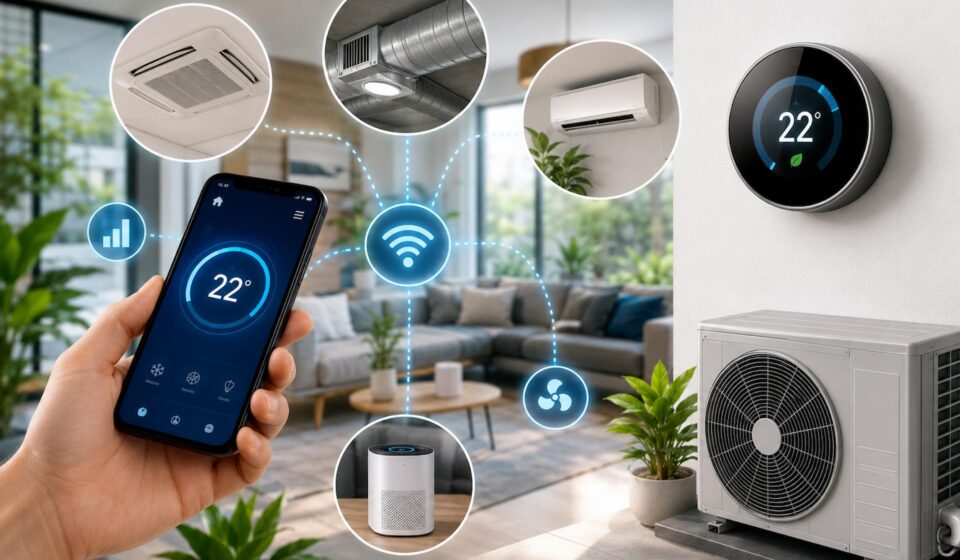
Smart thermostats are often the first upgrade homeowners make when modernizing an HVAC system. They provide far more control than standard programmable thermostats while helping reduce unnecessary energy use.
Many smart thermostats learn household routines automatically. Over time, they adjust heating and cooling schedules based on when people are home, asleep, or away. Some systems also use local weather data and occupancy sensors to optimize performance throughout the day.
Key Features of Smart Thermostats
- Remote control through smartphone apps
- Energy usage tracking
- Voice assistant compatibility
- Automatic scheduling
- Maintenance reminders
- Geofencing based on phone location
One of the biggest advantages is the ability to avoid overheating or overcooling empty spaces. Even small adjustments can significantly reduce energy consumption over time without sacrificing comfort.
For households with unpredictable schedules, smart thermostats offer flexibility that traditional systems simply cannot match.
Zoned HVAC Systems Improve Comfort in Every Room
One of the most common complaints in many homes is uneven temperature distribution. Some rooms stay too warm while others feel too cold. Zoned HVAC systems address this issue directly.
A zoning system divides the home into separate climate-controlled areas. Each zone has its own thermostat and airflow settings, allowing different parts of the house to maintain different temperatures simultaneously.
This is especially useful for:
- Multi-storey homes
- Large open layouts
- Homes with finished basements
- Rooms with heavy sun exposure
- Guest rooms are used occasionally
Instead of conditioning the entire home equally, zoning systems direct airflow only where it is needed. This reduces wasted energy while creating more personalized comfort throughout the house.
Families also benefit because different household members can adjust temperatures according to their own preferences without affecting the entire home.
High-Efficiency HVAC Systems Reduce Long-Term Costs
Older HVAC equipment often consumes far more energy than modern high-efficiency systems. Upgrading to energy-efficient heating and cooling equipment can dramatically improve home performance while lowering operating costs.
Modern systems use advanced compressors, variable-speed motors, and improved airflow technology to maintain more stable indoor temperatures with less energy.
Popular High-Efficiency HVAC Upgrades
Variable-Speed Air Conditioners
These systems adjust cooling output gradually instead of cycling on and off constantly. This improves humidity control, reduces noise, and uses less energy.
Heat Pump Systems
Modern heat pumps provide both heating and cooling efficiently in many climates. They transfer heat rather than generating it directly, making them highly energy efficient.
High-Efficiency Furnaces
New furnace models use fuel more effectively and lose less heat during operation. Many also include quieter operation and better airflow control.
Although installation costs may be higher initially, energy savings and reduced equipment wear often offset those expenses over time.
Smart Ventilation Systems Improve Indoor Air Quality
Indoor air quality has become a major concern for homeowners, especially as people spend more time indoors. Smart ventilation upgrades help maintain cleaner, healthier air while improving overall comfort, efficiency, and home performance.
Modern ventilation systems monitor humidity, airflow, and airborne particles to automatically maintain balanced indoor conditions.
Important Smart Ventilation Upgrades
- Energy recovery ventilators (ERVs)
- Heat recovery ventilators (HRVs)
- Smart humidity control systems
- Advanced filtration systems
- UV air purification technology
- Whole-home air monitoring systems
These technologies help reduce allergens, stale air, excess moisture, and indoor pollutants. Proper ventilation also helps prevent issues such as mould growth and lingering odors.
Balanced airflow is particularly important in tightly sealed, energy-efficient homes, where fresh air circulation may otherwise be limited.
The Future of Smart HVAC Technology
Smart HVAC technology continues to advance rapidly. Artificial intelligence, predictive maintenance, occupancy learning, and real-time environmental monitoring are becoming increasingly sophisticated.
Future systems will likely become even more adaptive, learning homeowners’ preferences with greater accuracy while automatically continuously optimizing energy use.
At the same time, growing interest in sustainability and energy-efficient living will continue driving demand for smarter heating and cooling solutions.
For homeowners, these innovations represent more than convenience. They offer practical ways to create healthier, more efficient, and more comfortable living spaces that adapt naturally to modern lifestyles.
Frequently Asked Questions
What is a smart HVAC system?
A smart HVAC system uses connected technology, sensors, and automation to control heating, cooling, and ventilation more efficiently while improving comfort, energy savings, and indoor air quality.
Do smart thermostats really save energy?
Yes. Smart thermostats reduce unnecessary heating and cooling by learning schedules, automatically adjusting temperatures, and allowing remote control via smartphone apps.
Are HVAC zoning systems worth it?
HVAC zoning systems improve comfort and reduce energy waste by controlling temperatures separately in different areas of the home, rather than conditioning every room equally.
How do smart HVAC systems improve indoor air quality?
Smart HVAC systems monitor airflow, humidity, and filtration performance to help reduce allergens, pollutants, excess moisture, and stale indoor air.
In Conclusion
Smart HVAC upgrades are changing how homeowners experience comfort, energy management, and indoor living. Modern systems provide far more than basic heating and cooling. They improve efficiency, support healthier indoor air, reduce maintenance stress, and give homeowners greater control over their living environments.
Whether through smart thermostats, zoning systems, advanced ventilation, or high-efficiency equipment, these upgrades help homes operate more intelligently while reducing long-term energy waste.
As smart home technology continues evolving, HVAC systems will remain one of the most valuable areas for homeowners looking to improve comfort, convenience, and overall home performance for years to come.