
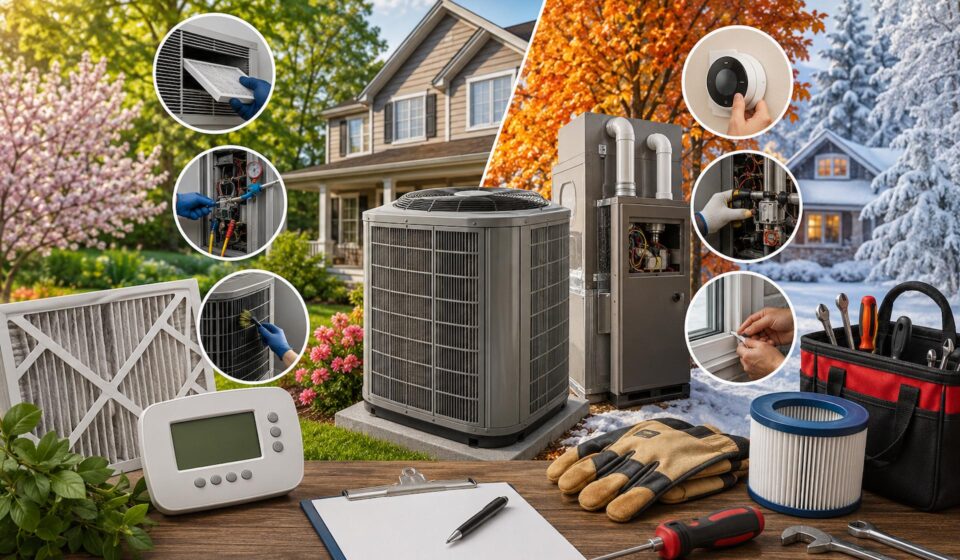

Heating and cooling systems work hard throughout the year to keep homes comfortable in changing weather conditions. From intense summer heat to freezing winter temperatures, HVAC systems operate almost continuously in many households. Without proper maintenance, even the most reliable systems can lose efficiency, struggle to maintain temperatures, and experience costly breakdowns.
Seasonal HVAC care helps homeowners stay ahead of problems before they become expensive repairs. Regular maintenance improves airflow, reduces energy consumption, extends equipment lifespan, and supports healthier indoor air quality. Small tasks completed at the right time can make a noticeable difference in both comfort and monthly utility bills.
This guide explores practical seasonal HVAC care tips to help heating and cooling systems operate efficiently year-round.
1. Replace Air Filters Regularly for Better Airflow
One of the simplest yet most important HVAC maintenance tasks is changing air filters consistently. Dirty filters restrict airflow, forcing heating and cooling systems to work harder to circulate air throughout the home. This added strain reduces efficiency and increases energy usage.
Most homes benefit from replacing filters every one to three months, depending on household conditions. Homes with pets, smokers, or allergy concerns may require more frequent replacements due to higher levels of dust and airborne particles.
Clean filters also improve indoor air quality by trapping dust, pollen, and allergens before they circulate through living spaces. Better airflow helps maintain even temperatures and reduces wear on HVAC components over time.
Checking filters monthly is a smart habit that supports year-round system performance.
2. Schedule Professional HVAC Inspections Before Peak Seasons
Preventive inspections help identify small issues before they become major system failures. Scheduling HVAC servicing before summer and winter ensures the system is ready for periods of heavy use.
Professional technicians typically inspect components such as:
- Thermostats
- Electrical connections
- Refrigerant levels
- Blower motors
- Coils
- Safety controls
- Drain lines
- Burners and heat exchangers
Routine inspections often improve efficiency while reducing the risk of unexpected breakdowns during extreme weather conditions. A poorly maintained system can lose significant efficiency over time, increasing operational costs without homeowners noticing a gradual decline in performance.
Seasonal tune-ups also help maintain manufacturer warranties for many HVAC systems.
3. Clean Around Outdoor HVAC Units
Outdoor condenser units require proper airflow to operate efficiently. Leaves, dirt, grass clippings, and debris can accumulate around the unit, restricting airflow and reducing cooling performance.
Homeowners should regularly clear vegetation and debris from around outdoor equipment. Keeping at least two feet of open space around the unit helps maintain proper ventilation and system efficiency.
During spring and summer, pollen buildup and yard debris can clog condenser fins, making it harder for the system to release heat. Gently rinsing the exterior with a garden hose can help remove dirt accumulation without damaging components.
Keeping outdoor units clean also reduces strain on compressors, which are among the most expensive HVAC parts to replace.
4. Check Thermostat Settings Each Season
Seasonal thermostat adjustments help improve comfort while lowering energy costs. Many homeowners waste energy by keeping settings too aggressive during extremely hot or cold months.
Programmable and smart thermostats simplify seasonal efficiency by automatically adjusting temperatures based on occupancy schedules. Even small temperature adjustments can reduce utility costs over time.
Helpful seasonal thermostat strategies include:
- Raising cooling temperatures slightly during summer afternoons
- Lowering heating temperatures overnight during winter
- Using energy-saving schedules while away from home
- Avoiding drastic temperature changes that strain the system
Modern smart thermostats can also provide energy reports and maintenance reminders, helping homeowners monitor system performance more effectively.
5. Inspect Air Vents and Ductwork for Obstructions
Blocked vents and leaking ductwork reduce HVAC efficiency and create uneven temperatures throughout the home. Furniture, rugs, curtains, and dust buildup can all interfere with proper airflow.
Walk through the home each season to ensure vents remain open and unobstructed. Vacuuming vent covers regularly also helps reduce dust circulation and improve airflow quality.
Ductwork inspections are equally important. Leaky ducts can waste conditioned air before it reaches living spaces, increasing energy costs and reducing system efficiency. In some homes, duct leaks account for substantial energy loss.
Professional duct inspections may help identify hidden airflow problems that affect comfort and system performance year-round.
6. Prepare Air Conditioning Systems Before Summer
Air conditioning systems often sit unused during colder months, making spring preparation especially important before temperatures rise.
Before summer begins:
- Test the system early
- Check airflow from vents
- Listen for unusual noises
- Inspect refrigerant lines
- Clear debris from outdoor units
- Replace filters
- Verify thermostat operation
Starting maintenance early helps avoid emergency repairs during peak heat when HVAC companies are busiest.
Warm-weather preparation also improves cooling efficiency during periods of extreme demand. Systems that receive seasonal servicing typically cool homes faster while consuming less energy.
Addressing minor problems before summer can prevent compressor damage and expensive mid-season breakdowns.
Why Seasonal HVAC Maintenance Matters
Consistent HVAC maintenance provides long-term benefits that extend beyond comfort alone. Well-maintained systems typically:
- Use less energy
- Experience fewer breakdowns
- Last longer
- Maintain better airflow
- Improve indoor air quality
- Reduce utility costs
- Deliver more consistent temperatures
Seasonal care also helps homeowners plan maintenance proactively rather than react to sudden equipment failures during extreme weather.
As energy costs continue rising, efficient HVAC operation becomes even more valuable for controlling household expenses.
FAQs
What season is best for HVAC maintenance?
Spring and fall are usually the best times for HVAC maintenance. These seasons prepare air conditioning systems for summer and heating systems for winter, helping reduce the risk of breakdowns during periods of heavy use.
How often should HVAC filters be changed?
Most HVAC filters should be replaced every one to three months. Homes with pets, allergies, or higher dust levels may require more frequent filter changes to maintain proper airflow and indoor air quality.
Does HVAC maintenance really reduce energy bills?
Yes, regular HVAC maintenance improves efficiency by helping systems operate with less strain. Clean filters, proper airflow, and tuned components often reduce energy consumption and lower monthly utility costs.
Why is my HVAC system running constantly?
Constant HVAC operation may result from dirty filters, thermostat issues, duct leaks, low refrigerant levels, poor insulation, or aging equipment. A professional inspection can help identify the underlying cause.
Conclusion
Seasonal HVAC care is one of the most effective ways to improve home comfort, protect equipment, and reduce long-term operating costs. Small maintenance tasks completed throughout the year can significantly improve heating and cooling efficiency while lowering the likelihood of expensive repairs.
From replacing filters and cleaning outdoor units to scheduling professional inspections and sealing air leaks, proactive care keeps HVAC systems performing reliably during every season. Homeowners who stay consistent with seasonal maintenance often enjoy better indoor comfort, healthier air quality, and longer-lasting equipment.
Reliable heating and cooling systems are essential for year-round comfort, and regular seasonal care helps ensure they continue operating efficiently when they are needed most.